I was talking to a friend of mine the other day. We were talking about books, movies, fiction and the effect thereof upon us as humans, and I just realized something…
I realized, as I was thinking out-loud, that in retrospect One does in fact live out certain qualities of the characters whom One sees as representations of oneself in fiction writings. One does in fact become them in some weird strange way. I personally am different because of that fiction. I am different because it did affect my being, my perception of who I am and whence I came; since the latter is molded by what I see, read, understand. While it may very well all be God’s gift, I still don’t know what to make of it, because I am that person I see in that fiction and at the same time I’m not; because I am myself and at the same time I see things as those “others” from the books read. I am definitely way different than before it. It affected me. I will never be the same because of it.
So who am I really? In this context, and among other things, I am the sum of my actions, my feelings, the lifetimes in the fiction I read and saw, I am a child of God, and I am human.
But what does that mean about love? That is what I just realized. Love in its purest human form is not necessarily a feeling, but a choice of inclusivity regardless of whatever or whoever that person is now, was or will become and hence transcends time. Let me explain.
Because a person is, in a particular way, a sum total of his choices and actions – things he had seen, read and understood – one is always different from oneself at a different points in time. One is never the same. A person is always everchanging, one’s personality is always growing, evolving if you will (and here I don’t mean it necessarily in a naturalistic sense).
This means that real love is constant and an unchanging choice. It transcends time and space in all directions. It judges not. It does not boast and it does not take things for granted, nor even its self. It is deeply personal. It doesn’t grab or take away. It gives. It is unconditional and free, unrestricted, condition-less. Or as the Bible puts it:
Love is kind and patient, never jealous, boastful, proud, or rude. Love isn’t selfish or quick tempered. It doesn’t keep a record of wrongs that others do. Love rejoices in the truth, but not in evil. Love is always supportive, loyal, hopeful, and trusting. Love never fails! Everyone who prophesies will stop, and unknown languages will no longer be spoken. All that we know will be forgotten. We don’t know everything, and our prophecies are not complete. But what is perfect will someday appear, and what isn’t perfect will then disappear.
(1 Cor 13,4–10)
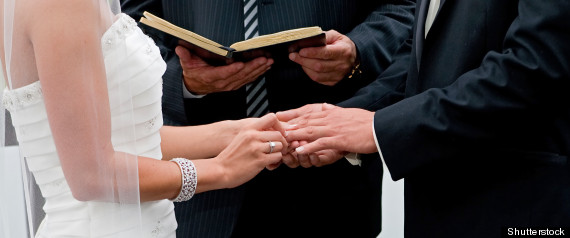
I think it is in many ways, that only God’s love can be this perfect, holy. Yet as His creation, we as humans, share the capacity to (though in some ways limited) love another being of our kind. The best representation of this kind of love is evident in a sacred matrimony, a marriage, a vow, a covenant, between two people.
That vow is timeless insofar as it establishes and confirms the choice or a decision to choose to love not only the exact same person who stands there by your side on the isle right here and right now, not even who that person was when you first met (and even before that, if you had or hadn’t taken that into account), but more importantly the person who your partner will become. Because in a similar way as I realized that the movies and books change who one is, your partner will be a different person years along the way as he or she is now. That person will have been changed in an ever changing body, mind, personality, looks, and also because, even not necessarily despite, of marrying you. Because you are also shaping them into a different person as they do you.
Hence it follows, that what you are really choosing is that you will have been choosing to love that ever-changing person, whom you do not yet know. That is downright miraculous and incredibly hopeful.
This kind of human capacity is even more miraculous if you consider how limited we are and how God is perfect and eternal, though we certainly aren’t. Sure, God’s love is hopeful: it is perfect and holy. But it is also ever-knowing, because God is eternal and he loves in all times and choices, He might just as well know every single possible choice you and I could make, and yet He chooses to pour His love and justice upon us all through Jesus Christ. But look now at a human, who is very temporally limited. No matter how we try to plan our lives, we cannot know what will happen even in the next day, hour perhaps. And that is why human love is so miraculous in comparison, because it is so very hopeful, that it does not stumble upon the possible futures when choosing to choose to love that person in front of the God almighty. It does not bother with all the possible outcomes of your partner. It trusts and hopes, it loves.
And so in some ways every marriage in front of God that lasts is a miracle. It is a testament to the miracle of how a human can in his brokenness still love, hope, trust and that the choice can endure. Every time someone chooses to seal themselves with another in front of God – not because of who the other person is, but also will be – it shows how love can transcend and how miraculous it really is.
To love means to decide to love.
http://www.theblaze.com/contributions/i-didnt-marry-the-one-she-become-the-one-after-i-married-her/
Hey, Matic, your English writing is truly marvelous! And I do like and concur with all the points you are making here…